
Renewables in Bangladesh
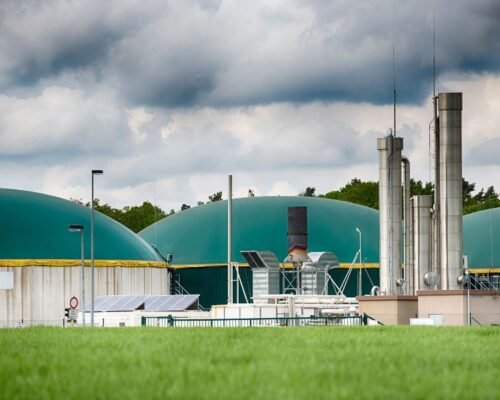
Biomass power plants generate electricity from agricultural residues widely available across the country.
Biomass
Biomass energy is the use of organic material to generate energy, often through the process of burning it. Typically, organic fuel refers to wood or plant-based materials; however, manure and household waste can also be burned. The use of biomass to produce energy also emits CO2, however, it is very little compared to fossil fuels. Biomass fuel needs to come from a sustainable source for it to be considered as a renewable source of energy and should be sourced locally to the point of use to keep transportation emissions as low as possible.
How Biomass Systems Work
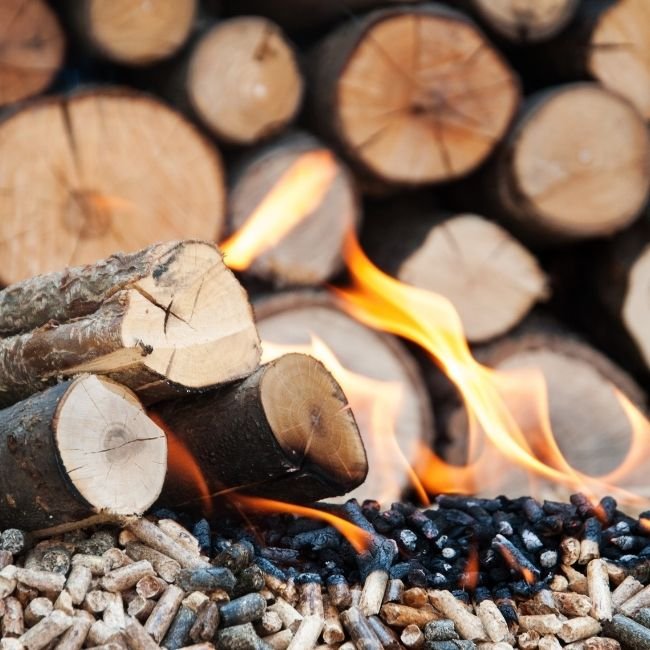
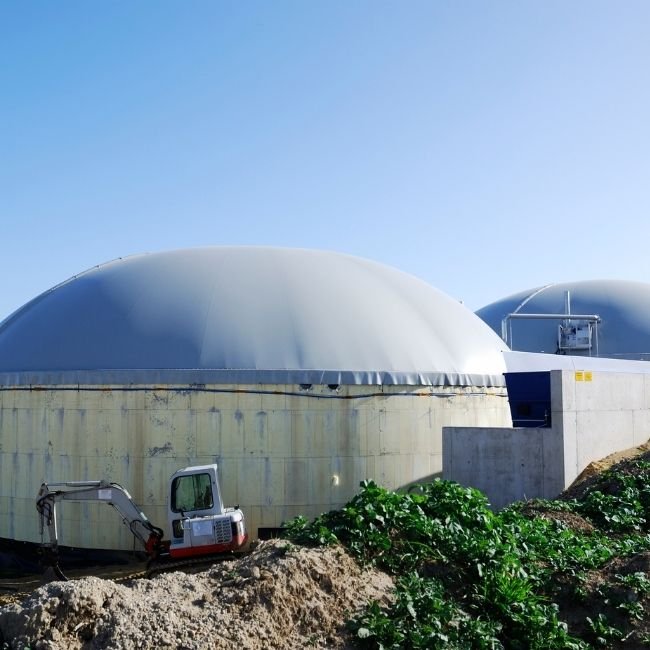
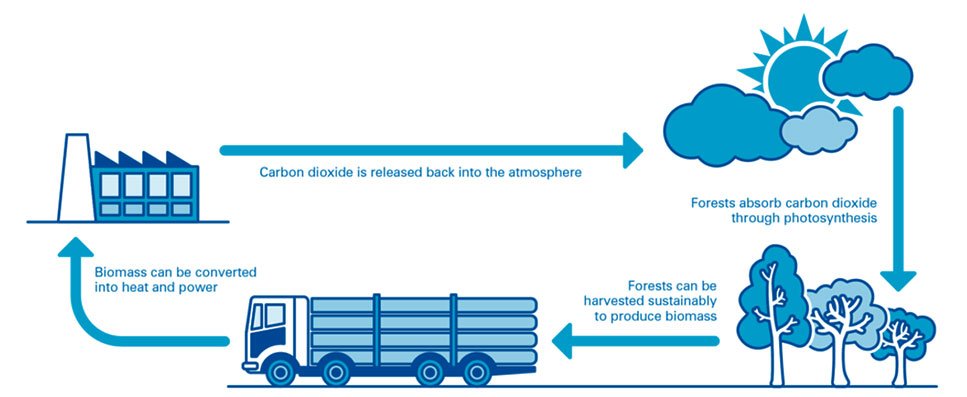
Biomass systems work by using organic materials such as sustainably harvested wood or agricultural residues as a renewable fuel source. Forests absorb CO2 from the atmosphere through photosynthesis, and this biomass can then be collected and transported to energy facilities.
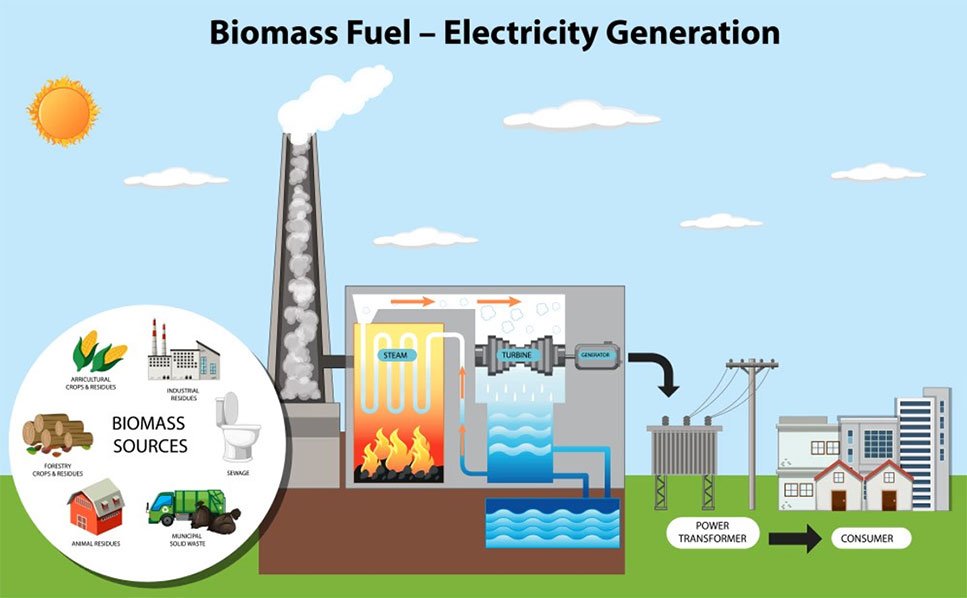
When burned or processed, the biomass is converted into heat or power, releasing CO2 back into the air. However, because new plants can regrow and reabsorb this CO₂, the process forms a closed, carbon-neutral cycle when managed sustainably. This makes biomass an effective renewable energy option for reducing reliance on fossil fuels while maintaining balanced carbon emissions. The energy content of Biomass can vary greatly. The moisture content of processed biomass fuel will typically have the greatest impact on the energy density of the fuel. Unlike other forms of renewable energy, biomass systems require fuel to be supplied to operate.
Fuel costs generally depend on the distance from the source and supplier of the biomass material, such as wood pellets or logs. In general, the running costs will be more favorable in areas where there is no mains natural gas supply. A properly installed boiler or heater is very efficient at burning biomass fuel and releasing heat and only leaving between 0.5 to 2% of the fuel volume in ash. Commercially available biomass technology can be 70-80% efficient at creating and emanating usable heat.
Installation Process of a Biomass System
- SITE ASSESSMENT & FEASIBILITY STUDY
- Evaluate heat/electricity demand, fuel availability, and logistical access.
- Assess environmental conditions, permitting requirements, and economic viability.
- FUEL SOURCE IDENTIFICATION
- Determine biomass type (wood chips, pellets, agricultural residues, biogas feedstock).
- Ensure sustainable and consistent supply for long-term operation.
- SYSTEM DESIGN & CAPACITY SELECTION
- Size the boiler/gasifier, storage units, and feeding system based on energy needs.
- Select between direct combustion, gasification, or anaerobic digestion systems.
- PROCUREMENT OF EQUIPMENT
- Purchase biomass boiler/gasifier, storage silos, feeding systems, heat exchangers, pumps, and control units.
- Ensure all components meet safety and efficiency standards.
- CIVIL WORKS & FOUNDATION PREPARATION
- Construct foundations for boiler house, fuel storage area, and auxiliary structures.
- Provide proper ventilation and fire safety arrangements.
- INSTALLATION OF BOILER/GASIFIER SYSTEM
- Mount the main biomass unit on prepared foundations.
- Install fuel-feeding conveyors, hoppers, or augers.
- FUEL STORAGE & HANDLING SETUP
- Build biomass storage silos or covered storage spaces.
- Install systems for automated or manual fuel transfer to the combustion unit.
- ELECTRICAL & MECHANICAL INTEGRATION
- Connect pumps, blowers, heat exchangers, and control systems.
- Integrate with existing heating systems, steam networks, or electrical generators.
- EMISSION CONTROL & SAFETY SYSTEMS
- Install filters, cyclones, scrubbers, or ESPs (if required).
- Set up fire detection, suppression systems, and proper earthing.
- TESTING & COMMISSIONING
- Conduct start-up tests to check fuel flow, combustion efficiency, heat output, and emission levels.
- Adjust system settings for optimal performance.
- MONITORING & MAINTENANCE SETUP
- Implement a monitoring system for real-time performance tracking.
- Schedule routine inspections for ash removal, cleaning, lubrication, and safety checks.
Equipment List for a Biomass System
- BIOMASS PROCESSING & HANDLING EQUIPMENT
- Biomass shredder/chipper
- Hammer mill (for size reduction)
- Biomass dryer (optional, for high-moisture feedstock)
- Conveyor belts or screw feeders
- Storage silos or covered biomass storage units
- Fuel feeding system (automatic or manual)
- COMBUSTION / CONVERSION UNIT
- Biomass boiler (for heat/steam generation) or
- Biomass gasifier (for syngas production) or
- Anaerobic digester (for biogas systems)
- Burner assembly
- Furnace chamber or reactor vessel
- HEAT & POWER GENERATION COMPONENTS
- Heat exchanger
- Steam turbine or Organic Rankine Cycle (ORC) turbine (for electricity generation)
- Generator/alternator
- Hot water/steam distribution network (piping, pumps, valves)
- EMISSION CONTROL & SAFETY SYSTEMS
- Cyclone separator
- Bag filter or Electrostatic Precipitator (ESP)
- Chimney/stack
- Fire detection and suppression system
- Spark arrestor
- Heat and pressure relief valves
- ELECTRICAL & CONTROL EQUIPMENT
- Control panel (PLC/SCADA system)
- Sensors and meters (temperature, pressure, flow rate)
- Power cables, wiring, and switchgear
- Inverter and power conditioning equipment (if electricity is generated)
- AUXILIARY SYSTEMS
- Ash handling and removal system
- Air blowers and induced draft fans
- Water treatment unit (for steam boilers)
- Cooling tower or radiator system (if required)
- Fuel moisture analyzer
- MONITORING & PERFORMANCE SYSTEMS
- Data logger
- Remote monitoring module (optional)
- Efficiency and emissions monitoring instruments
Investment in Biomass Systems Installation
The major capital cost items for a biomass power system include the fuel storage and fuel handling equipment, the combustor, boiler, prime mover (e.g. turbine or engine), generator, controls, stack, and emissions control equipment.
System cost intensity tends to decrease as the system size increases. For a power-only (not combined heat and power) steam system in the 5 to 25 MW range, costs generally range between $3,000 and $5,000 per kilowatt of electricity. Levelized cost of energy for this system would be $0.08 to $0.15 per kWh, but this could increase significantly with fuel costs. Large systems require significant amounts of material, which leads to increasing haul distances and material costs. Small systems have higher O&M costs per unit of energy generated and lower efficiency than large systems. Therefore, determining the optimal system size for a particular application is an iterative process.