

Renewables of Bangladesh
Micro-wind systems utilize localized wind resources, suitable for coastal and open rural areas.
Micro Wind
Micro Wind refers to small-scale wind energy systems designed to generate electricity from wind for households, businesses, or small communities. These systems typically have a capacity of less than 100 kW and are used for distributed or off-grid power generation.
Small-scale wind turbines were one of the first forms of renewable energy generators developed. Wind turbines come in many different shapes and sizes. These vary depending on the application and power output. Typically, small wind turbines are free-standing on a monopole and have two or three blades. There are a few 6-bladed machines called ‘wind-batterie-chargers’. These usually generate around 100 Watts.
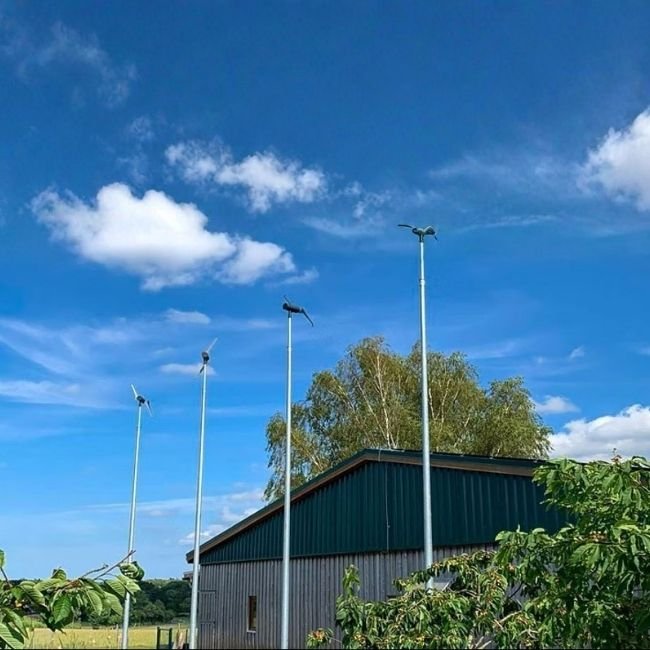
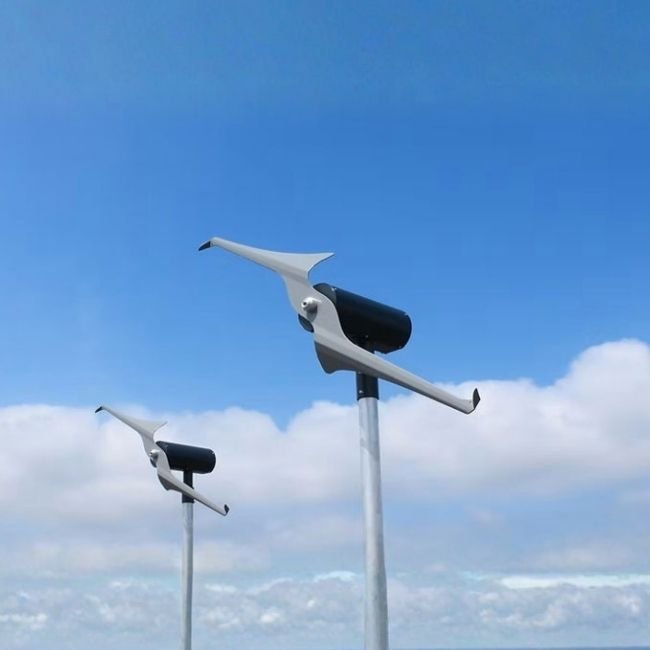
How Micro Wind Systems Work
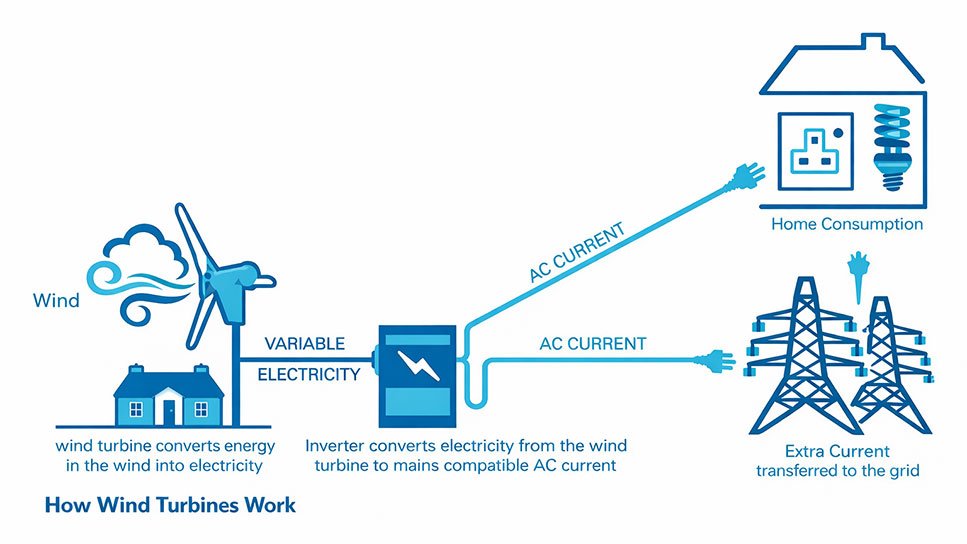
A micro wind turbine uses rotor blades to capture the kinetic energy of moving air. When the wind blows, it spins the blades connected to a rotor, which drives a generator to produce electricity. The generated power is then either used directly, stored in batteries, or fed into the grid (in grid-tied systems).
Micro wind systems are ideal for areas with consistent wind speeds (usually above 4–5 m/s) and can reduce dependence on the national grid while promoting clean, renewable energy use.
The productivity of a wind turbine is directly dependent on the annual average wind speed at a given location. For example, a 5kw turbine could produce as much as 9000KWh a year where the average wind speed is 5ms-1. If the average wind speed is 8ms-1, this could rise to an expected annual yield of more than 20,000kWh.
Wind turbines work best in wide open spaces far away from obstructions. Small wind turbines typically use a permanent magnet generator to produce electricity. This electricity is then fed into an inverter. The output power from the inverter can be distributed to the grid or used in an off-grid standalone configuration. A well-maintained turbine could last more than 20 years.
Installation Process of a Micro Wind System
1. SITE ASSESSMENT AND FEASIBILITY STUDY
Before installation, a detailed site assessment is conducted to determine average wind speed, direction, and obstructions. Wind data (preferably ≥ 4–5 m/s) is analyzed using tools like anemometers or wind resource maps. The feasibility study also includes load analysis, location suitability, and compliance with local regulations or permits.
2. SYSTEM DESIGN AND SELECTION
Based on the site conditions and energy needs, the appropriate turbine type (HAWT or VAWT), tower height, and rated capacity are selected. Design considerations include grid connectivity (on-grid/off-grid), battery storage, and compatibility with existing systems like solar PV (for hybrid setups).
3. FOUNDATION AND TOWER INSTALLATION
A stable foundation is constructed using concrete or steel anchors to ensure structural safety. Once the base cures, the tower is erected, either tubular, lattice, or guyed type, depending on system size and location. Proper grounding and earthing connections are also installed to prevent electrical hazards.
4. TURBINE ASSEMBLY AND MOUNTING
The turbine’s rotor blades, hub, and nacelle are assembled and mounted on top of the tower. The orientation is adjusted according to the predominant wind direction for optimal performance. All mechanical and electrical fittings are securely fastened to ensure safety during operation.
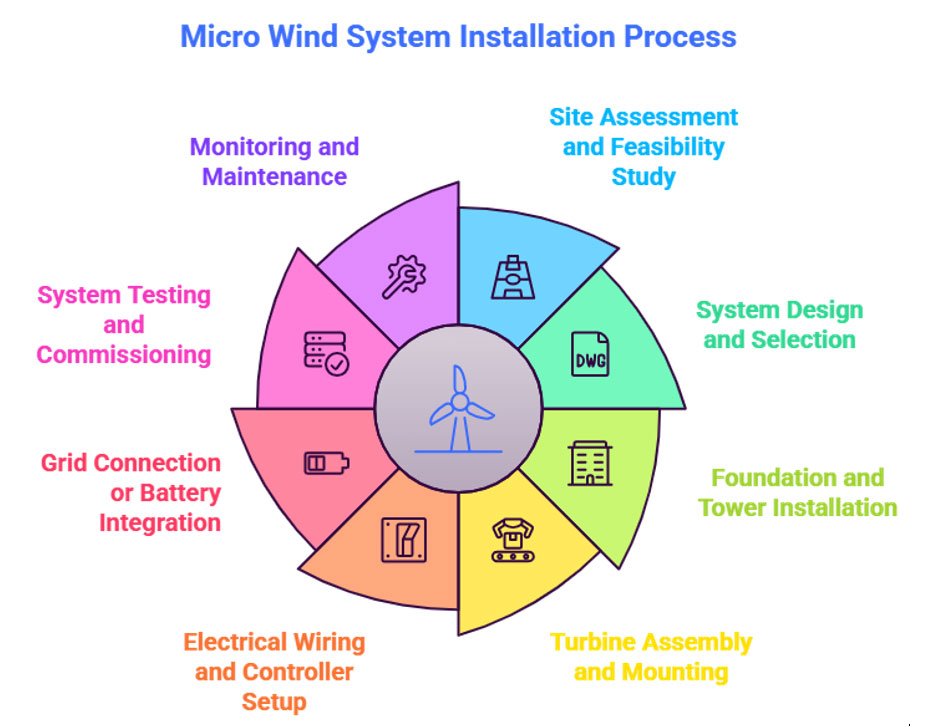
5. ELECTRICAL WIRING AND CONTROLLER SETUP
Electrical connections are made between the turbine, charge controller, inverter, and battery system (if applicable). High-quality, weather-resistant cables are used to reduce losses. The controller regulates voltage and current, protecting the system from overcharging or overloads.
6. GRID CONNECTION OR BATTERY INTEGRATION
Depending on the system type:
>> For on-grid systems, the turbine is connected to the main grid through an inverter and net meter, allowing energy export.
>> For off-grid or hybrid systems, the energy flows to battery storage or directly to connected loads through a distribution box.
7. SYSTEM TESTING AND COMMISSIONING
Once installation is complete, the entire setup undergoes testing to verify performance parameters such as voltage output, rotor speed, and controller operation. Any electrical or mechanical issues are resolved before commissioning the system for regular use.
8. MONITORING AND MAINTENANCE
After commissioning, the system is regularly monitored through data loggers or smart monitoring systems. Routine maintenance includes checking blade alignment, lubricating moving parts, inspecting cables, and cleaning components to ensure long-term efficiency and safety.
Equipment List for a Micro Wind System
- WIND ENERGY GENERATION COMPONENTS
- Micro Wind Turbine: Converts wind energy into mechanical rotation (horizontal-axis or vertical-axis type).
- Rotor Blades: Capture the kinetic energy of wind and rotate the turbine.
- Hub and Nacelle Assembly: Houses the generator, gearbox (if applicable), and rotor hub.
- Generator/Alternator: Converts mechanical energy from the rotor into electrical energy.
- Yaw Mechanism (for HAWT): Aligns the turbine with the wind direction for maximum efficiency.
- SUPPORT AND MOUNTING STRUCTURE
- Tower Structure: Tubular, lattice, or guyed type tower for mounting the turbine at an optimal height.
- Foundation and Anchor Bolts: Provide structural stability and withstand wind loads.
- Guy Wires and Tensioning Equipment: Used for supporting guyed towers (if applicable).
- ELECTRICAL AND POWER MANAGEMENT SYSTEM
- Charge Controller: Regulates voltage and current from the turbine to protect the battery and electrical system.
- Inverter: Converts DC power from the turbine (or batteries) to AC for use in standard appliances or for grid connection.
- Battery Bank (for Off-Grid/Hybrid Systems): Stores excess power for use during low-wind periods.
- Distribution/Control Panel: Houses fuses, circuit breakers, and switches for electrical safety and system management.
- Cables and Connectors: Includes DC and AC cables, MC4 connectors, and weather-resistant wiring for efficient power flow.
- Earthing and Lightning Protection Kit: Protects against electrical surges and lightning strikes.
- MONITORING AND SAFETY EQUIPMENT
- Monitoring System / Data Logger: Tracks real-time power generation, wind speed, and system performance.
- Anemometer and Wind Vane: Measures wind speed and direction for system assessment and optimization.
- Braking System (Mechanical/Electrical): Ensures turbine safety during high wind conditions or maintenance.
- Surge Protection Device (SPD): Protects electrical components from voltage spikes.
- Circuit Breakers and Fuses: Safeguard electrical circuits from overload or short circuits.
- OPTIONAL COMPONENTS (FOR ENHANCED PERFORMANCE)
- Hybrid Controller (for Wind-Solar Systems): Manages combined renewable sources efficiently.
- Remote Monitoring Module: Enables online performance tracking via web or mobile apps.
- Battery Management System (BMS): Ensures safe charging and discharging of lithium-ion batteries.
Investment in Micro Wind Systems Installation
A typical 5–6 kW micro wind turbine installation can provide a reliable source of renewable electricity for homes, farms, or small businesses, depending on local wind conditions. The cost and productivity of such a system are highly dependent on site-specific factors, particularly wind speed and turbulence levels.
Under favorable conditions, typically an open, turbulence-free site with an annual average wind speed between 5–9 m/s, the system’s average installed cost is approximately £20,000 to €23,000, equivalent to BDT 3.2 million. Over its lifetime, the turbine can generate around 300,000 kWh of electricity in 20 years, significantly reducing grid dependency.
Environmentally, this translates to an annual reduction of about 2.5–5.6 tons of CO₂ emissions, equivalent to planting 250–560 pine trees over the same period. Such systems demonstrate both economic and ecological value, particularly for rural or off-grid applications where renewable energy reliability is essential.