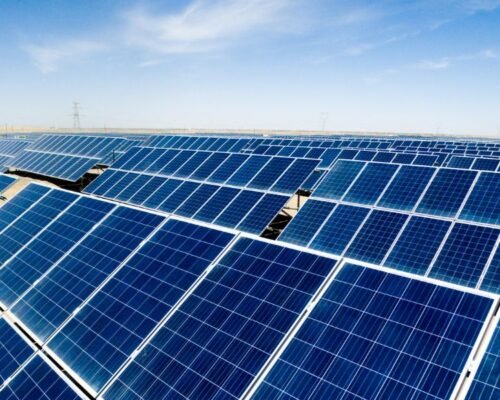

Renewables in Bangladesh
Solar power systems provide reliable and affordable electricity across the country, from urban rooftops to rural and off-grid communities.
Solar Power
Solar power is the most dominant and cost-effective technology driving Bangladesh’s urgent need for clean, secure energy. Bangladesh is committed to generating 40% of its power from clean sources by 2041. Economically, new solar installations in Bangladesh are already cost-competitive with imported fossil fuels, offering predictable, long-term savings and enhancing national energy security across all sectors.
What is solar power?
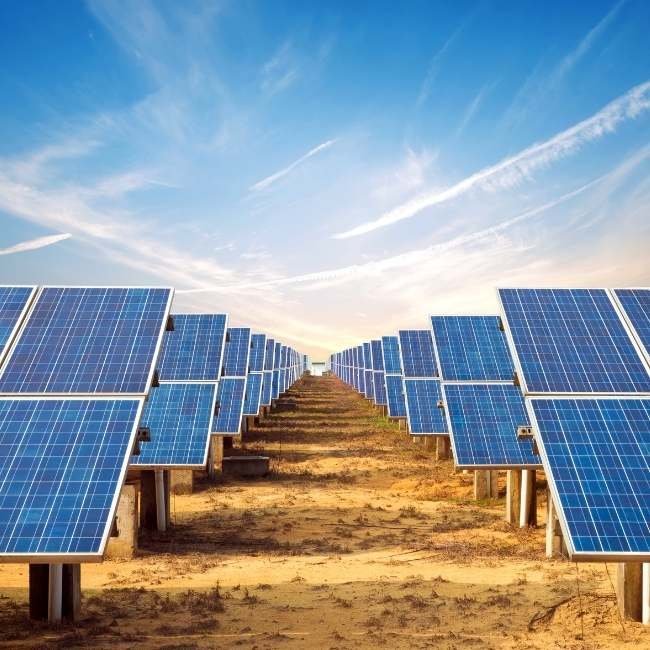
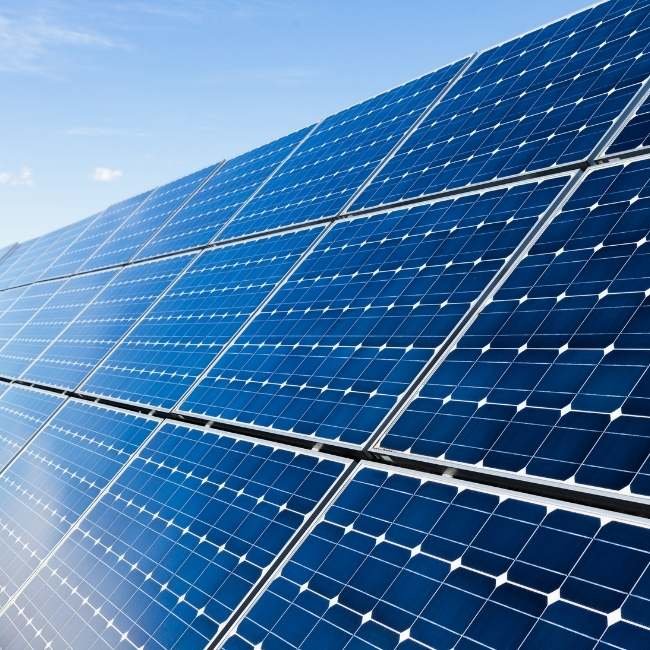
Solar panels, also known as Photovoltaic (PV) panels, generate electricity from sunlight. PV works by changing photons of light into electrons using a silicone-based material. PV panels do not need direct sunlight to work. They only need daylight. The more daylight they receive, the more electricity they produce.
PV panels are relatively straightforward to install and require very little maintenance. Their prices have also dropped significantly in the last decade and are now a cost-effective renewable energy solution. A typical PV installation could save homeowners up to 70% on their energy bills, depending on site-specific factors. This solar power generation process is achieved through two primary technological pathways:
- Photovoltaic (PV) technology
- Concentrating solar-thermal power (CSP)
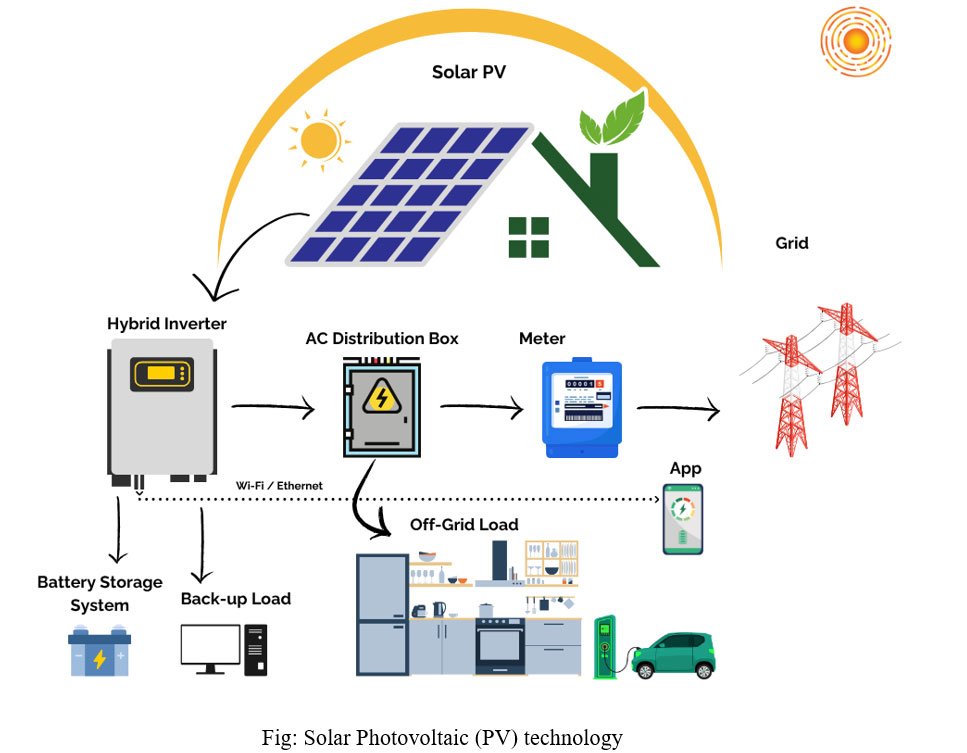
Photovoltaic technology, most found in solar panels on rooftops and in large-scale solar farms, converts sunlight directly into electricity using semiconductor materials. This direct conversion process is a hallmark of PV systems, making them highly versatile and scalable for a wide range of applications, from small residential setups to massive utility-scale power plants.
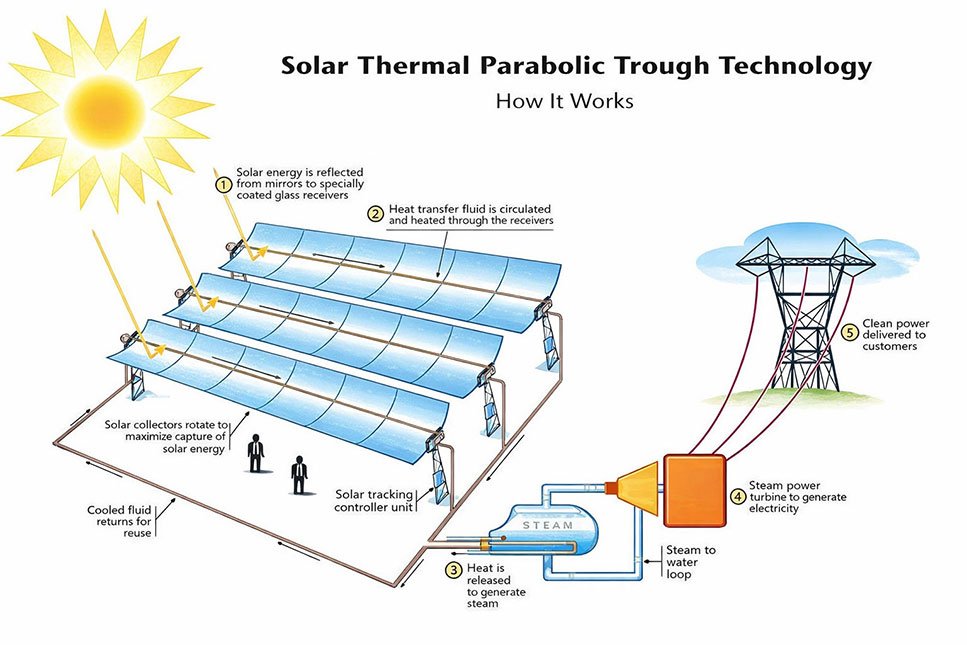
In contrast, concentrating solar-thermal power systems use mirrors to reflect and focus sunlight onto receivers, which collect the solar energy and convert it to heat. This thermal energy is then used to produce electricity, often by heating a fluid to power a turbine.
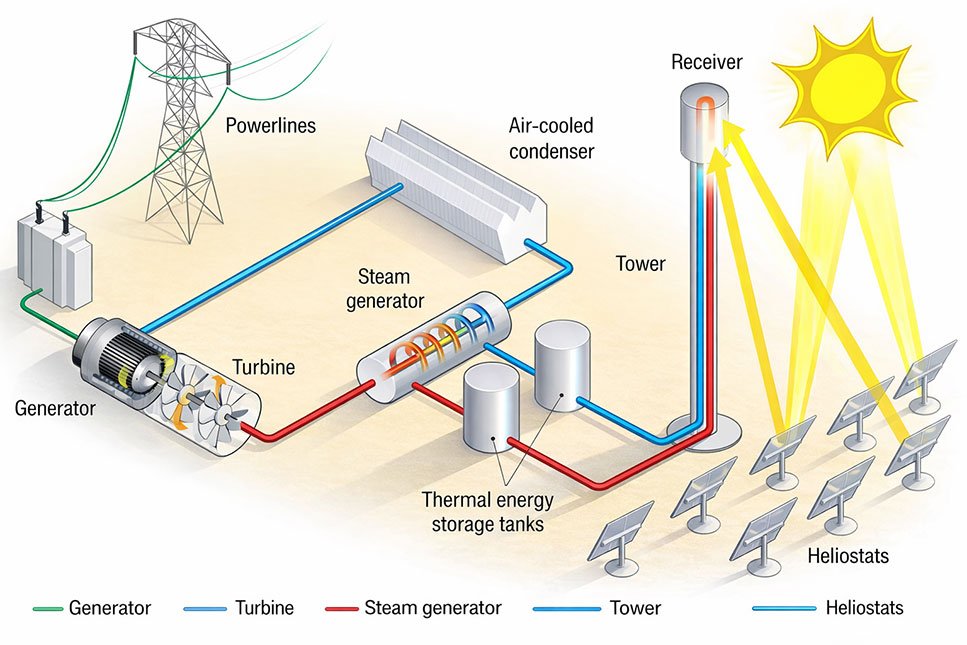
While both technologies harness solar radiation, PV has become the more prevalent and familiar method for most installations due to its direct and modular nature.
Core Components of a Solar Power System
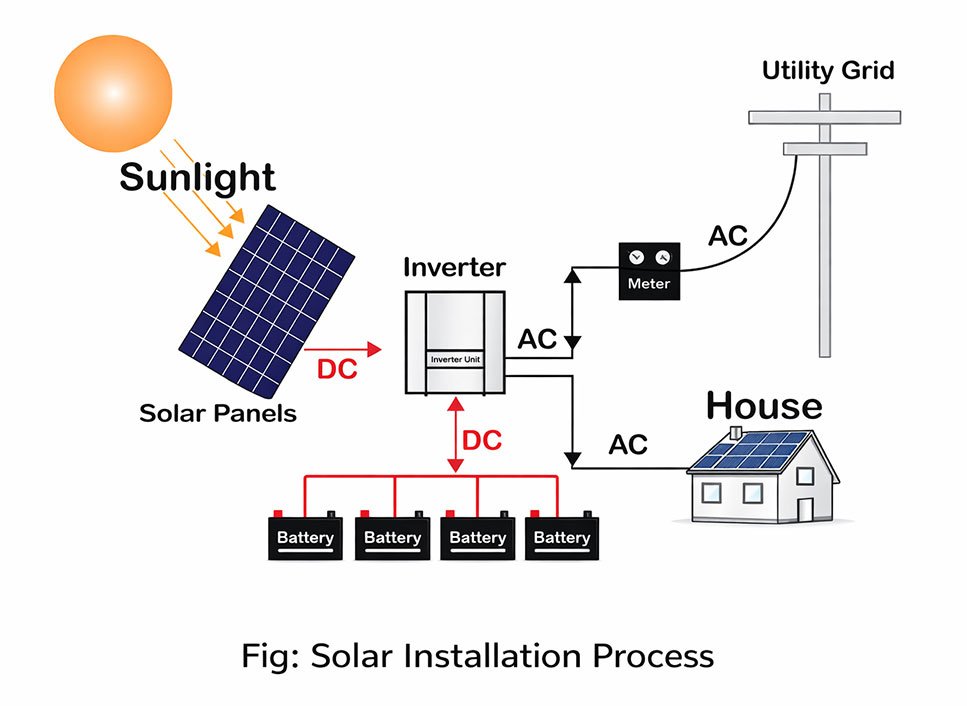
A complete solar photovoltaic system comprises several key components, where the most important one being the solar panels, which contain PV cells that generate DC electricity from sunlight. The power generated by the panels is then sent to an inverter, often referred to as the “brain” of the system, which converts the DC power into alternating current (AC) as used by household appliances and the national electrical grid. These can be string inverters, which are centralized units that manage the output of a group or string of panels. Microinverters, in contrast, are installed on each panel, allowing for panel-level optimization. A third option, power optimizers, combines the benefits of both by regulating the DC output at each panel before sending it to a central inverter for conversion.
Batteries are also a critical component as they store excess energy generated during the day for use at night or during grid outages, making them essential for off-grid or hybrid systems. The system is completed by a racking and mounting system that secures the panels to the roof or ground, and other balance-of-system (BOS) components such as wiring, combiner boxes, and fuses.
Types of Solar Panels available in Bangladesh
Solar energy harnessed through PV panels is a cornerstone of renewable energy strategies worldwide. Different types of solar panels offer varying efficiencies, costs, and applications, allowing users to select based on their energy needs and budget constraints. The three most common types are monocrystalline, polycrystalline, and thin-film solar panels, each with unique characteristics that influence their performance and suitability for particular settings.
Monocrystalline solar panels are crafted for the highest energy conversion rates, typically between 17% and 22%. These panels are known for their sleek black appearance and compact design, making them ideal for residential and commercial rooftop installations where space efficiency is valuable. They also have excellent durability and generally come with long warranty periods, often 25 years or more. While their manufacturing is more expensive and resource-intensive, leading to high upfront costs, the panels’ superior performance and longevity provide strong long-term value.
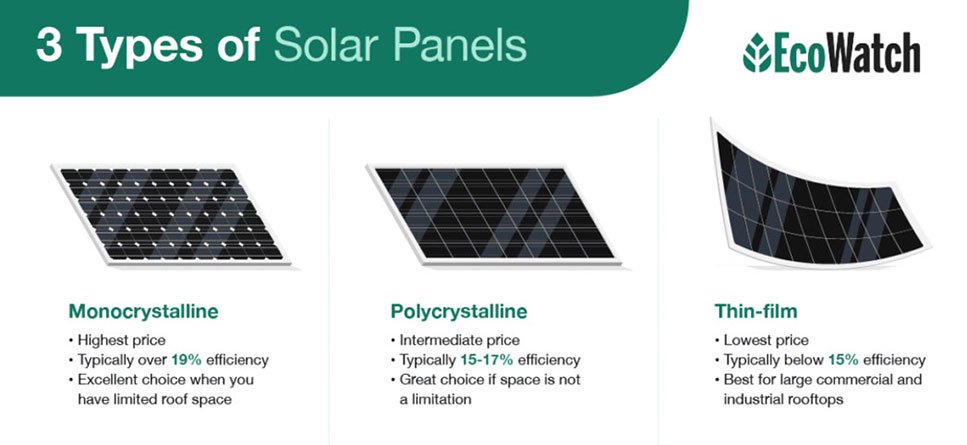
Polycrystalline panels are produced by melting multiple fragments of silicon crystals together, imparting a distinctive blue, speckled appearance. These panels have slightly lower efficiencies, usually between 13% and 17%. However, the simpler manufacturing process reduces their cost, making them a popular choice for budget-conscious consumers and larger installations with ample space. These panels are moderately less efficient in high temperatures and have a slightly shorter lifespan, but remain a reliable and cost-effective solution.
Thin film solar panels consist of layers of PV material deposited onto flexible substrates, providing versatility in installation, including use on curved or unconventional surfaces. While generally the least efficient at below 12%, thin film panels excel in diffuse light and shaded conditions. They are the least expensive to produce and lightweight, but require significantly more area for equivalent power output and tend to have a shorter lifetime and reduced durability compared to crystalline panels.
Blumberg Tier-1 Solar Panel Provider List
13. TALESUN/ TARMKO
14. SERAPHIM
15. WAAREE
16. QCELLS/ HANWHA QCELLS
17. HAITAI SOLAR
18. EGING
19. JOLYWOOD
20. ZNSHINESOLAR
21. SOLARSPACE
22. RENEW PHOTOVOLTAICS
23. OSDA/ AUSTA |
24. OHT-SAAE/ HT-SOLAR
25. RENESOLA
26. HANERSUN
27. ADANI/ MUNDRA
28. SUMEC/ PHONO SOLAR
29. VSUN
30. BYD
31. VIKRAM SOLAR
32. ET SOLAR INC/ ELITE SOLAR
33. YH SUNPRO POWER
34. FELLOW ENERGY
35. BOVIET SOLAR
Solar System Installation
Installing a solar power system requires more than just solar panels. It involves a set of interconnected components working together to harness sunlight and convert it into usable electricity. Whether planning an off-grid setup, an on-grid system, or a hybrid installation, understanding each component is crucial for a safe, efficient, and long-lasting solar energy solution.
Stand-alone Solar System
The installation procedure for Solar Systems is straightforward but requires technical adherence to maximize generation and ensure reliable long-term benefits.
CUSTOMER QUALIFICATION AND SYSTEM SIZING:
EPC developers first qualify customers. System sizing is determined by the essential loads required, typically basic lighting, fan, and device charging, and other electric loads, ensuring the system capacity meets basic load requirements.
INSTALLATION OF MOUNTING STRUCTURE:
The EPC technicians install the mounting structure, selecting a design appropriate for the specific roof type, concrete slab, or corrugated roofing, and securing it to prevent structural movement and securely hold the solar panels in place. Different types are
Roof-Mounted: Ideal for residential rooftops (both flat and sloped)
Ground-Mounted: Useful for large-scale or rural installations with ample space
Pole-Mounted: Allows panel tilt adjustment; ideal in certain terrains
PANEL INSTALLATION AND OPTIMIZATION:
The PV modules are fixed onto the mounting structure. Proper alignment is critical, and the panels must be installed at the correct angle to maximize solar irradiation capture and ensure optimal electricity generation by converting sunlight into direct current (DC) electricity.
SOLAR INVERTER INSTALLATION:
To convert the DC electricity produced by solar panels into alternating current (AC) electricity for home or business use, different types of inverters are used.
SOLAR BATTERIES (Optional but Essential for Off-Grid/Hybrid Systems):
Solar batteries play a crucial role in storing excess electricity generated during the day for use at night or during power outages. They ensure an uninterrupted power supply, particularly in off-grid or hybrid systems. Two main types of batteries are commonly used:
lithium-ion batteries, which are compact, efficient, and have a long lifespan
Lead-acid batteries, which are more affordable but bulkier and require regular maintenance
CHARGE CONTROLLER:
The charge controller regulates the voltage and current flowing from the solar panels to the battery system, preventing overcharging and extending battery life. It also protects the system from voltage fluctuations and electrical surges. There are two primary types of charge controllers: PWM (Pulse Width Modulation), suitable for small systems and cost-effective installations, and MPPT (Maximum Power Point Tracking), which is more advanced and efficient, ideal for larger systems requiring higher energy conversion efficiency.
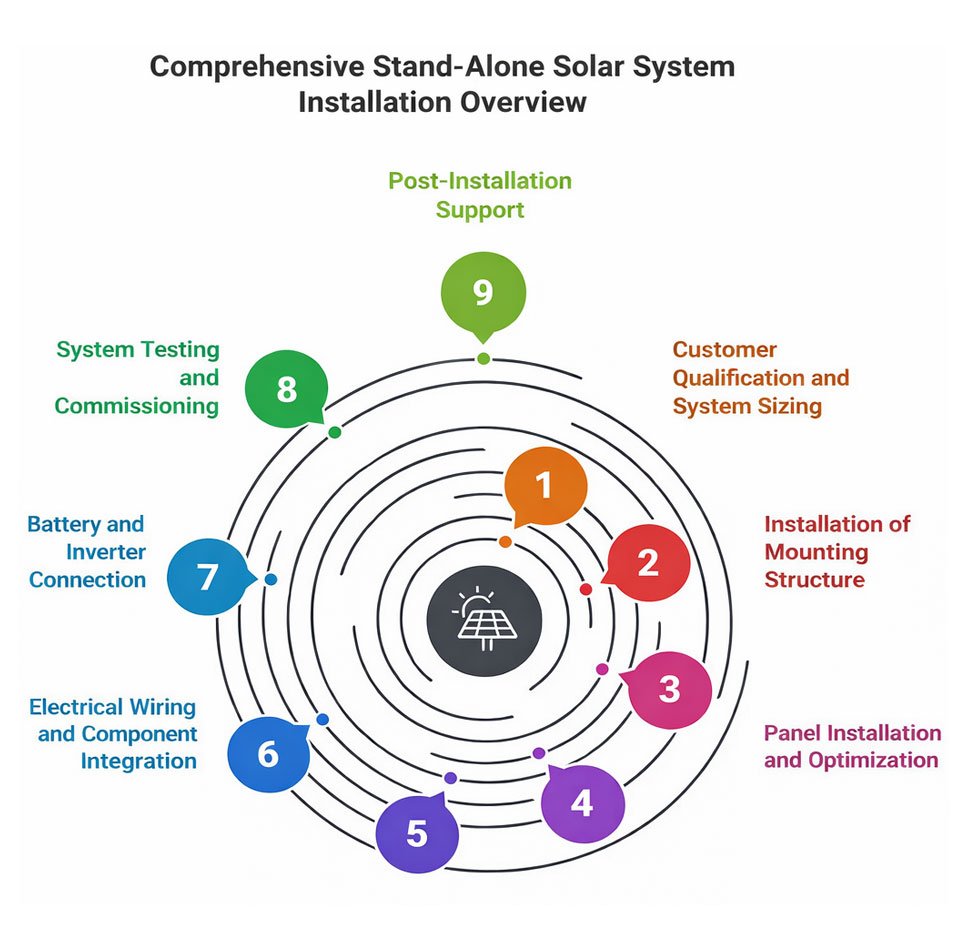
ELECTRICAL WIRING AND COMPONENT INTEGRATION:
The electrical wiring connects the solar array to the charge controller, which is essential for regulating the current flow into the battery bank. In grid-independent systems, the integrity of this wiring is vital for safety and performance.
Junction Box: Is a vital safety component that connects multiple solar panels and organizes all wiring connections in a protected enclosure.
DC/AC Cables and Wiring: High-quality solar-rated cables are essential for ensuring system efficiency and safety. Properly rated cables help minimize energy loss, reduce overheating, and enhance the overall reliability of the solar system.
MC4 Connectors: Are standardized, waterproof connectors used to join solar panels safely and efficiently. They make installation faster and more reliable while ensuring that connections are resistant to moisture, dust, and electrical faults.
Earthing Kit and Lightning Arrester: To protect the solar system from electrical surges and lightning strikes, an earthing kit and lightning arrester are essential components.
Monitoring System (Optional but Recommended): Allows real-time tracking and helps users analyze energy generation, identify faults quickly, and optimize energy consumption.
AC Breaker/Distribution Box: Manages, controls, and safeguards the alternating current output from the inverter. This ensures safety, system stability, and compliance with electrical standards.
NET METER (For On-Grid Systems Only)
In on-grid solar systems, the net meter plays a key role in measuring electricity exchange between the solar system and the national grid. It records both the energy consumed from and supplied to the grid, enabling users to benefit from net metering. This allows excess generated power to be credited against the user’s electricity bill, promoting cost savings and efficient energy use.
BATTERY AND INVERTER CONNECTION
The system requires a proper connection of the battery for DC energy storage and the inverter. The negative wire from the panel connects to the negative terminal of the inverter, and similarly for the positive wire connection.
SYSTEM TESTING AND COMMISSIONING
The final step involves a system check to verify power generation. The EPC technician tests the system output (kWp) to ensure it is generating electricity correctly and confirms the reliability of the battery charging cycle.
POST-INSTALLATION SUPPORT
The operational integrity of these systems in rural settings hinges upon continuous support. The EPC developers are mandated to provide after-sales services, ensuring system maintenance and consumer trust.
Successful solar installation depends on the seamless integration of all components from capturing sunlight and storing energy to distributing and monitoring electricity safely. Each element, from panels to protection devices, contributes to system reliability and performance. Various EPC providers in Bangladesh, high-quality components certified by IEC and TÜV standards, ensuring maximum efficiency, durability, and safety. Whether for homes, offices, factories, or government institutions, investing in solar power remains a smart, sustainable, and future-ready decision.
Grid-tied Solar Systems
Grid-Tied Industrial/Commercial Net Metering Process is characterized by strict regulatory hurdles aimed at maintaining grid stability and promoting responsible private investment. It is primarily utilized by industrial and commercial entities.
A) Initial Regulatory and Eligibility Assessment
The Net Metering Guideline of 2025 permits the installation of rooftop solar PV systems on industrial, commercial, and residential buildings, allowing owners to offset their demand, reduce fuel costs, and store excess electricity on the grid.
To participate in the Net Metering Scheme, the consumer must be a three-phase consumer with a sanctioned load greater than 7 kW. This limitation effectively restricts residential participation to only very large users and primarily targets large commercial and industrial consumers. Furthermore, the solar PV system capacity must not exceed 70% of the sanctioned load of the consumer, a critical measure to prevent unstable reverse power flow and maintain grid equilibrium.
B) The installation procedure for grid-connected Solar Systems is straightforward as stand-alone solar Systems
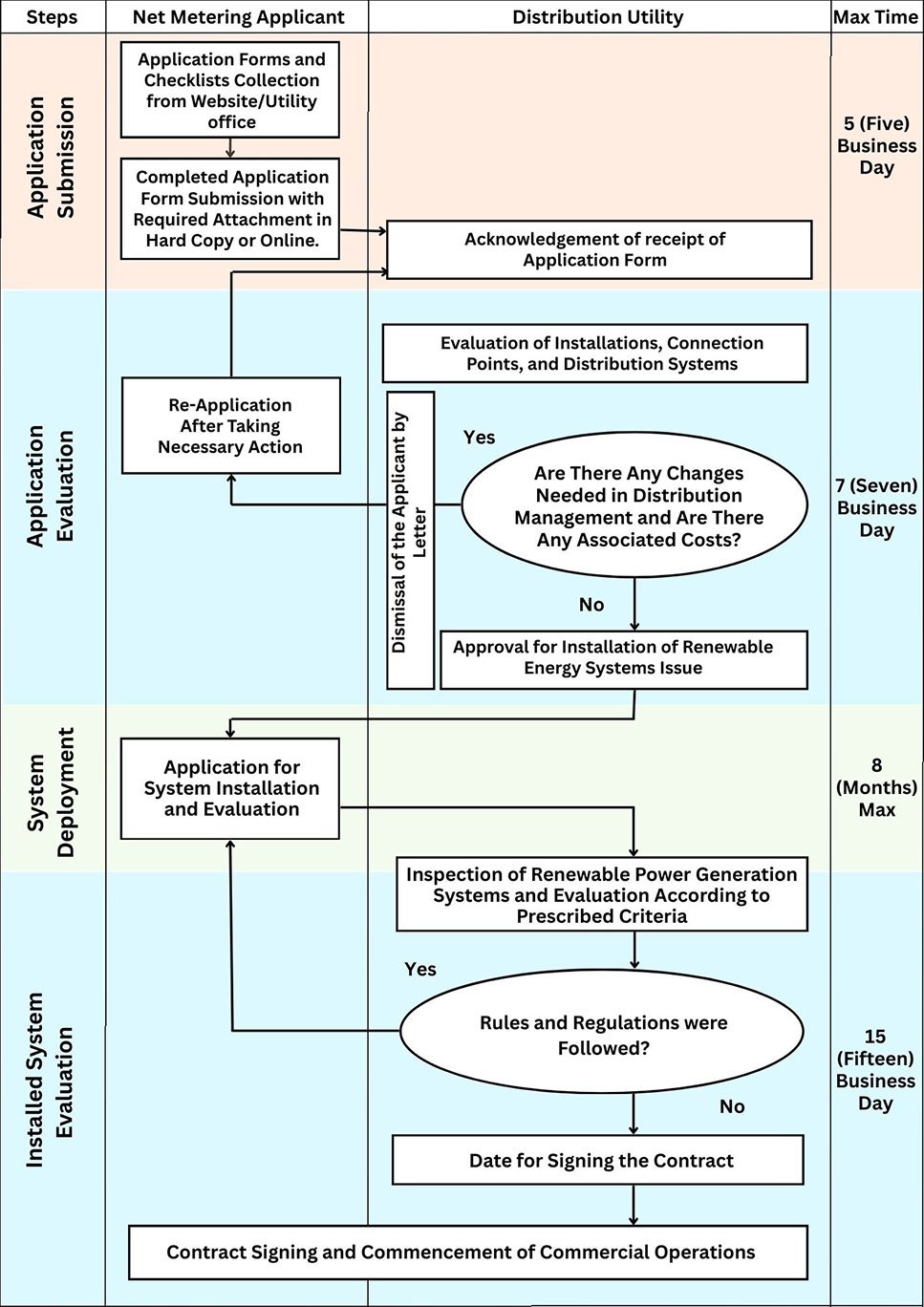
C) Net-metering Process Flowchart
SOLAR SYSTEMS DESIGN CALCULATION
- Rooftop Solar Calculator – Rooftop Solar Calculator
- System Calculator: https://nesco.gov.bd/site/page/5151b5c0-b887-4064-bd3e-250f82dfa41e/Solar-Energy-Calculator-for-Green-bd
- Net Metering Calculator for Initial Assessment of Rooftop Solar – SREDA | Net Metering Calculator for Initial Assessment of Rooftop Solar in Bangladesh
- Solar Inter-Row-Spacing Calculator – SREDA | Solar Inter-Row-Spacing Calculator
- Location Wise Systems: https://pvgis.com/login?redirect=%2Fpvgis24%2Fapp%2F1%2Fpvgis24
Investment in Solar Systems Installation
A typical 1 MWp DC rooftop solar system offers a reliable source of renewable electricity for commercial or industrial buildings. The installation cost is approximately 39.5 to 40 million BDT, with financing mostly through an 80% debt loan at a 5% interest rate over 8 years. The system generates about 1.2 million kWh annually, with the electricity tariff starting at around 7.9 BDT/kWh and gradually increasing over time. Over its lifetime, this system significantly reduces dependency on grid electricity through electricity savings and generates additional income via carbon credits. The investment breaks even in about five years, with an internal rate of return (IRR) of 14.5% and a return on investment (ROI) of about 14.16%.
Environmentally, the solar system reduces greenhouse gas emissions by lowering the use of fossil fuel power, helping to combat climate change and improve urban air quality. It contributes to energy independence and reduces transmission losses by generating electricity onsite. Over its lifespan, the system prevents substantial CO₂ emissions equivalent to planting hundreds of trees, demonstrating both economic and ecological value. Such installations are particularly beneficial in urban settings like Dhaka, aligning with Bangladesh’s renewable energy targets and climate commitments.
Business Perspective
Stage 1: Foundational Legal and Investment Approval (Industrial Developers)
Industrial projects require a foundational legal establishment before engaging with distribution utilities.
- Company Incorporation: The first step for investors is registering the business as a legal entity, typically a Private Limited Company, through the Registrar of Joint Stock Companies and Firms (RJSC). This process formalizes ownership, liability, and governance.
- BIDA Registration: Following incorporation, the investment project must be registered with the Bangladesh Investment Development Authority (BIDA). BIDA registration is mandatory to secure recognition, obtain subsequent critical licenses, and receive government investment incentives.
- Environmental Assessment: Depending on the project’s scale and nature, an initial environmental clearance from the Department of Environment (DoE) is necessary to ensure adherence to relevant environmental conservation rules throughout the project life cycle.
Stage 2: Technical Application and Utility Clearance
The application for grid interconnection is submitted to the local Distribution Utility, which acts as the official nodal point for approval.
- Application Submission: The applicant formally submits the required application, system checklist, and the draft contract forms related to Net Metering to the relevant Distribution Utility office (e.g., DPDC or DESCO).
- Technical Design Submission: Comprehensive engineering documentation must be provided, including a detailed description of the components and the Single Line Diagrams (SLDs) specific to the consumer’s voltage level.
- Utility Review and NOC Issuance: The utility reviews the technical submission for compliance and feasibility. Upon successful review, a No Objection Certificate (NOC) is issued, which SREDA allows users to verify online.
Stage 3: Installation, Inspection, and Commissioning
This phase involves the physical deployment of the system using certified components, followed by integration and final sign-off by the utility.
- Procurement: All key components, especially panels and inverters, must be sourced from SREDA’s Approved Products List and must possess mandatory compliance with Bangladesh Standards (BDS).
- Structural and Electrical Installation: Installation begins with securing the mounting structure, followed by installing the panels at the correct angle. The electrical integration involves connecting the string output to the grid-tied inverter input. Safety precautions require the inverter to remain turned off during these connections.
- Grid Connection and Metering: The inverter’s output is connected to the main switchboard, providing power to the facility and enabling export to the grid. The Distribution Utility is responsible for installing the bi-directional metering device, which is necessary to calculate energy flow for net metering billing.
- Utility Inspection and Final Clearance: Utility officials conduct a mandatory site inspection to verify the installation against the approved SLDs and component lists, ensuring adherence to safety protocols.
- Commissioning and Synchronization: Following a successful inspection, the system is formally commissioned. The net metering contract is signed with the utility, and the system is synchronized with the national grid, marking the commencement of operations.