Biogas to Electricity

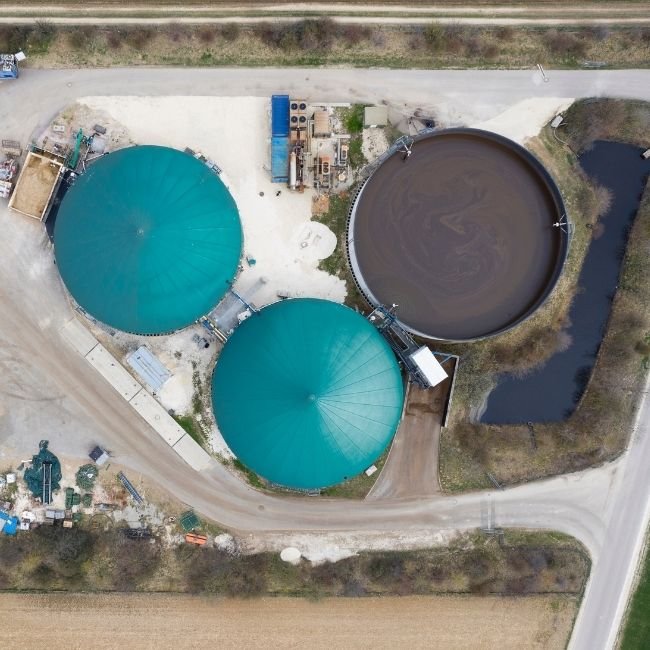
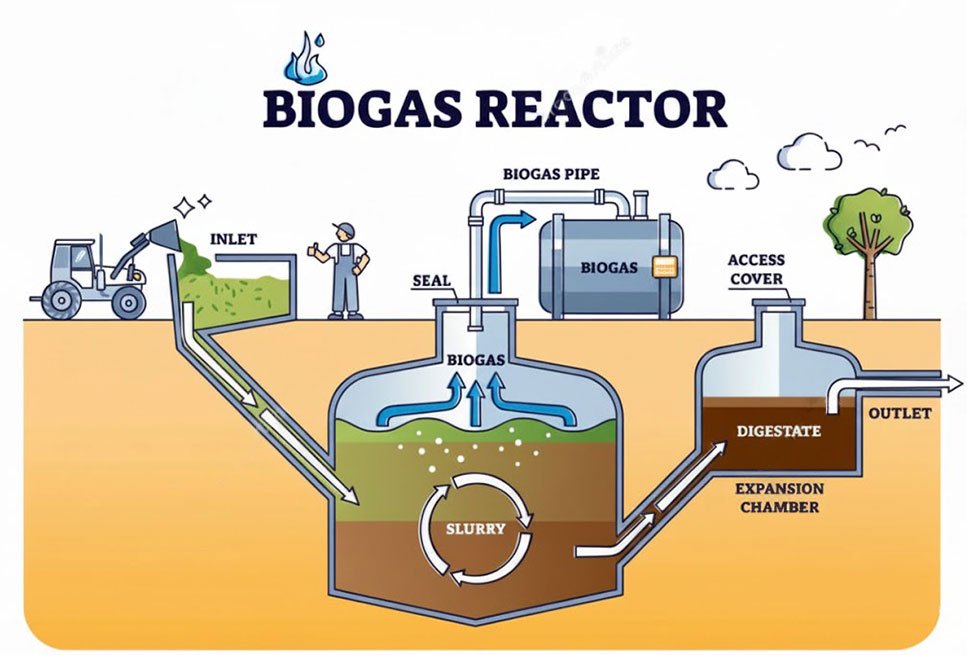
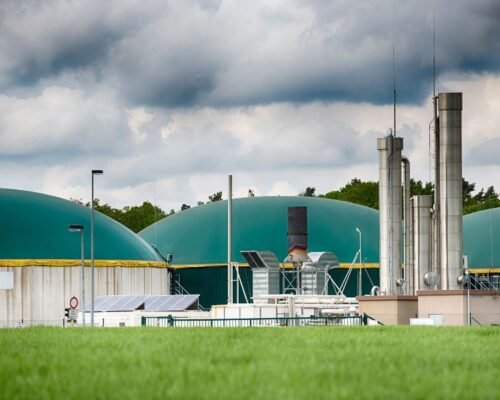
Biogas is the production of gas from organic waste through the natural process of Anaerobic Digestion (AD). When the waste is allowed to decompose in an oxygen free environment it produces biogas.

Biogas power systems convert agricultural and organic waste into clean electricity, supporting circular economy goals through efficient waste management and resource recovery.

Biogas

Biogas is the production of gas from organic waste through the natural process of Anaerobic Digestion (AD). When the waste is allowed to decompose in an oxygen free environment it produces biogas. This is typically a mixture of around 60% methane, 40% carbon dioxide and traces of other gases. The exact composition of biogas depends on the type of feedstock being digested.

How Biogas Systems Works

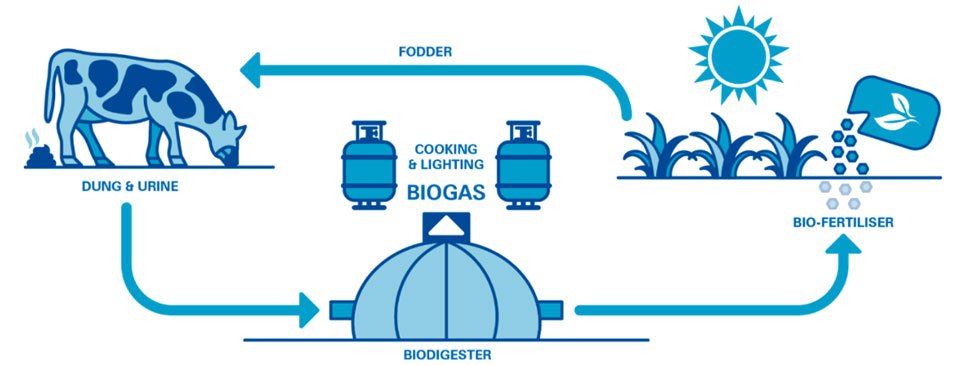
Biogas can be used for many different things however the generation of electricity and heat are typically the primary uses. Additionally, biogas can be purified to remove carbon dioxide and other trace gases. This is often called biomethane and can then be injected into the mains gas grid or used as road fuel.

As the process of AD requires some heat to process the organic waste it is suited to Combined Heat and Power (CHP) applications and this is currently the most popular option for most installations. CHP plants can achieve overall efficiencies more than 80% at the point of use. The ratio between heat and power varies depending on the scale and technology used but typically 35-40% is converted to electricity, 40-45% to heat and the remainder lost as inefficiencies in the process.

AD is not a new technology and has been used since the 1800s. However, an increasing number of AD plants are being built to generate clean renewable energy. Additionally, AD is also increasingly used to treat the waste produced in homes, farms, supermarkets and industries and helps divert organic waste from landfill.

On average, Cattle slurry with 10% dry-matter weight has the potential to produce between 15 and 25 cubic meters of Biogas per Ton of Waste. Over the course of a year, an average cow can produce around 16 tons of slurry. One cubic meter of biogas, comprising 60% methane, contains 6.7 kWh of energy. This typically equates to over 2kWh of electricity and 2.5kWh heat per cubic meter when used for combined heat and power applications. In short, 1 cow could potentially produce 240 cubic meters (1,608kWh) of biogas energy per year. In addition, the by-product (known as digestate) from a well-controlled and maintained biogas system is a mineral and nitrogen-rich fertiliser that can be used to enhance plant and crop growth.

AD systems vary greatly in price depending on feedstock and complexity. Despite relatively high capital costs, payback times for installations tend to be short, largely due to high avoided costs of waste disposal.

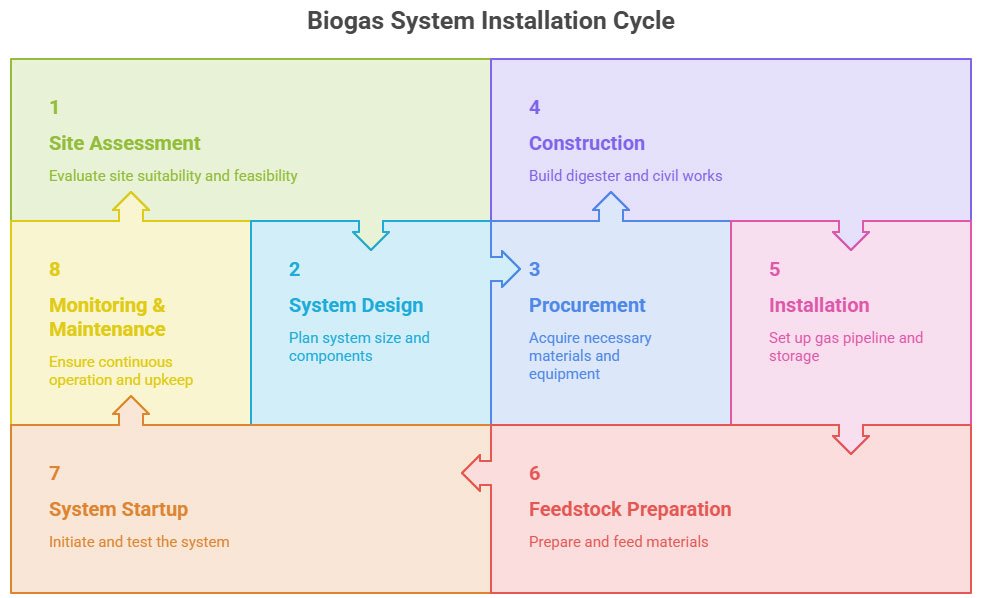
Installation Process of a Biogas System

  1. SITE ASSESSMENT & FEASIBILITY STUDY
  • Identify location for the digester and feeding area.
  • Assess availability of feedstock (cow dung, poultry waste, kitchen waste, agricultural residue).
  • Evaluate water availability and distance from kitchens, farms, or required load.
  • Conduct soil testing and check for flooding or high groundwater risks.
  1. SYSTEM DESIGN & SIZING
  • Calculate gas demand (household, farm, industrial).
  • Estimate daily feedstock availability.
  • Determine digester size (m³), gas storage capacity, and pipeline length.
  • Select system type: fixed-dome, floating drum, flexible balloon, or industrial biogas plant.
  1. PROCUREMENT OF MATERIALS & EQUIPMENT
  • Biogas digester tank, inlet and outlet pipes
  • Gas pipeline (HDPE/PVC), valves, pressure gauges
  • Gas storage bag or gasholder
  • Slurry pit for bio-fertilizer
  • Stove or biogas burner
  • Safety equipment (pressure relief, flame arrestor)
  1. CONSTRUCTION OF DIGESTER & CIVIL WORKS
  • Excavate the site and prepare the foundation.
  • Construct digesters using brick, concrete, or prefabricated materials.
  • Build inlet tank, outlet chamber, and slurry channel.
  • Install gas outlet opening at the top dome (for fixed-dome systems).
  1. INSTALLATION OF GAS PIPELINE & STORAGE SYSTEM
  • Lay underground or surface pipelines from digester to end-use point.
  • Install valves, joints, and pressure regulators.
  • Set up gas storage (gasholder or flexible balloon) if required.
  1. FEEDSTOCK PREPARATION & INITIAL FEEDING
  • Mix biomass with water in the correct ratio (commonly 1:1).
  • Load the digester gradually to avoid overpressure.
  • Seal the inlet and wait for microbial activity to establish.
  1. SYSTEM STARTUP & COMMISSIONING
  • Allow 2–4 weeks for anaerobic digestion to stabilize (“start-up period”).
  • Monitor gas pressure, odor, and composition.
  • Test gas flows to the stove or generator.
  • Resolve leakage, blockages, or moisture accumulation in pipelines.
  1. MONITORING & ROUTINE MAINTENANCE
  • Daily feeding of biomass to maintain steady gas output.
  • Regularly remove slurry for use as bio-fertilizer.
  • Clean pipeline condensate traps to prevent blockage.
  • Inspect gas pressure, digester dome, and valves for leaks.

Equipment List for a Biogas System

  1. DIGESTION & FEEDSTOCK HANDLING EQUIPMENT
  • Biogas Digester Tank (Fixed-dome, floating drum, balloon, or industrial digester)
  • Inlet Mixing Tank (for mixing feedstock with water)
  • Outlet/Slurry Chamber
  • Feedstock Mixing Tools (shovel, mixer, stirrer)
  • Water supply system (pipes, taps)
  1. GAS STORAGE & COLLECTION COMPONENTS
  • Gas Holder / Gasholder Dome (in fixed-dome systems)
  • Floating Drum Gas Holder (in floating drum systems)
  • Flexible Biogas Storage Bag / Balloon (for portable or larger plants)
  • Gas Pressure Regulator
  • Moisture Trap / Condensate Trap
  1. GAS DISTRIBUTION SYSTEM
  • Gas Pipelines (HDPE/PVC)
  • Gas Valves & Stop Cocks
  • Pressure Gauge / Manometer
  • T-pipes, Elbows, Joints & Fittings
  • Flame Arrestor / Safety Valve
  1. UTILIZATION EQUIPMENT
  • Biogas Stove / Burner
  • Biogas-powered Generator (optional, for electricity generation)
  • Water Heater / Cooking Appliances (if applicable)
  1. SLURRY MANAGEMENT & FERTILIZER COMPONENTS
  • Slurry Outlet Channel
  • Slurry Collection Pit or Tank
  • Slurry Pump (optional)
  • Tools for handling biofertilizer
  1. MONITORING & CONTROL EQUIPMENT
  • Temperature & pH Meter
  • Gas Flow Meter
  • Biogas Analyzer (optional, for large systems)
  • Pressure Relief Valve
  • Leak Detection Tools
  1. SAFETY & AUXILIARY SYSTEMS
  • Earthing System
  • Fire Safety Kit
  • Ventilation System (for indoor installations)
  • Backup Water Storage
  • Protective Clothing & Gloves

Investment in Biogas Systems Installation

It has been argued that expanding use of wind power will lead to increasing geopolitical competition over critical materials for wind turbines such as rare earth elements neodymium, praseodymium, and dysprosium. But this perspective has been criticised for failing to recognise that most wind turbines.


Latest Projects